
- Specjal offers
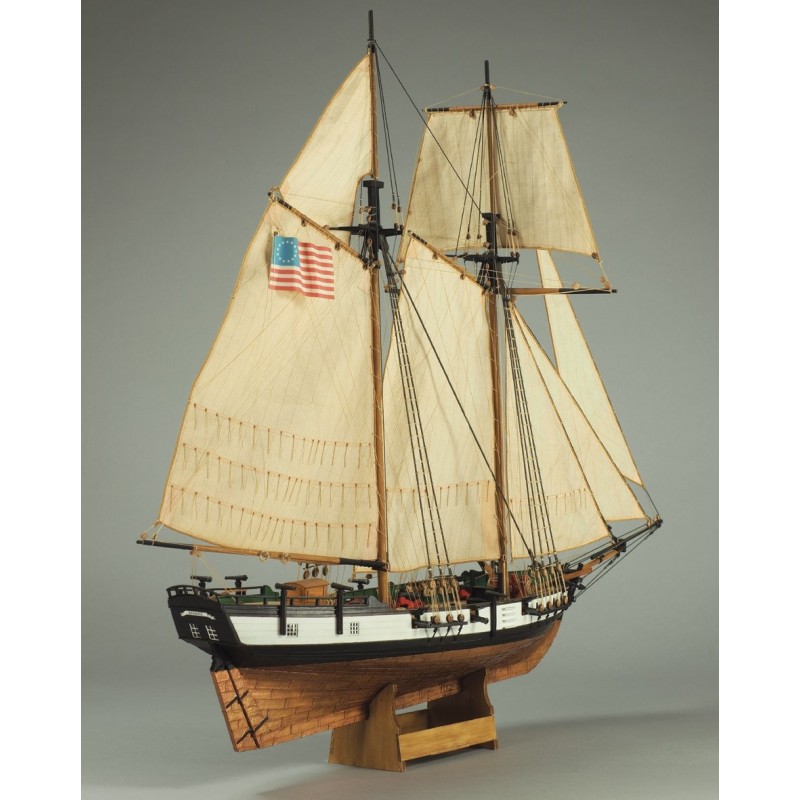


Name: Berbice
Laser-Cut Cardboard Kit includes:
The name clipper has its roots in English slang verb to clip. Originally it described small single masted fishermen and pilots in Pennsylvania,
New England and Chesapeake Bay. Shipwrights from Baltimore gained the biggest fame and they are considered the creators of clippers.
They also built single masted sloops, cutters, twin-masted schooners, brigs and brigantines. Thanks to fine-shaped hulls clippers were
so fast that speed occurred as their most known attribute. Clippers' owners and captains were often merchants or corsairs dealing
with smuggling and slave trade. They plundered Spanish towns, broke British blockade on American coasts and became more and more popular.
In the nineteenth century big merchantman were built according to clippers' design for tea transport from China and India so they were called tea clippers. The first one, 750-tons Rainbow designed by John W. Griffiths, was launched in 1854 in New York.Berbice is a two-masted topsail schooner, a classic example of Baltimore clipper. She was built in 1780 and bought by Royal Navy in 1782 or 1783. After twelve years in service she wrecked on San Domingo coast. She had yacht-type hull lines that provided her with high speed. Armament consisted of eight 4-pounders and eight 3/4-pounds falkonets and some smaller weapon. A letter of marque and reprisal survived in Massachusetts state archives given to a Pole Feliks Miklaszewicz with permission to take actions against British ships and goods. Miklaszewicz was a captain of two-masted schooner
Prince Radziwil equipped with six small guns and two mortars. His ship could be similar to Berbice. The City of Baltimore was founded in 1729, and was named after Lord Baltimore, the governor of the province at the time. In the middle of the eighteenth century, shipbuilders from the port built a large amount of small single and two mast vessels.

Data sheet